How to care for wool so it lasts decades
Wool is the most forgiving fibre in your wardrobe — if you stop treating it like cotton.
12 October 2026 · 6 min read
Wool is the most forgiving fibre in your wardrobe — if you stop treating it like cotton.
12 October 2026 · 6 min read
Most wool garments are ruined by washing, not by wearing. Wool fibres have a natural crimp that traps air, and a waxy outer layer called lanolin that repels dirt and resists odour. Both of those things are damaged by hot water, agitation and detergent — which is why the single best thing you can do for a knit is simply not to wash it.
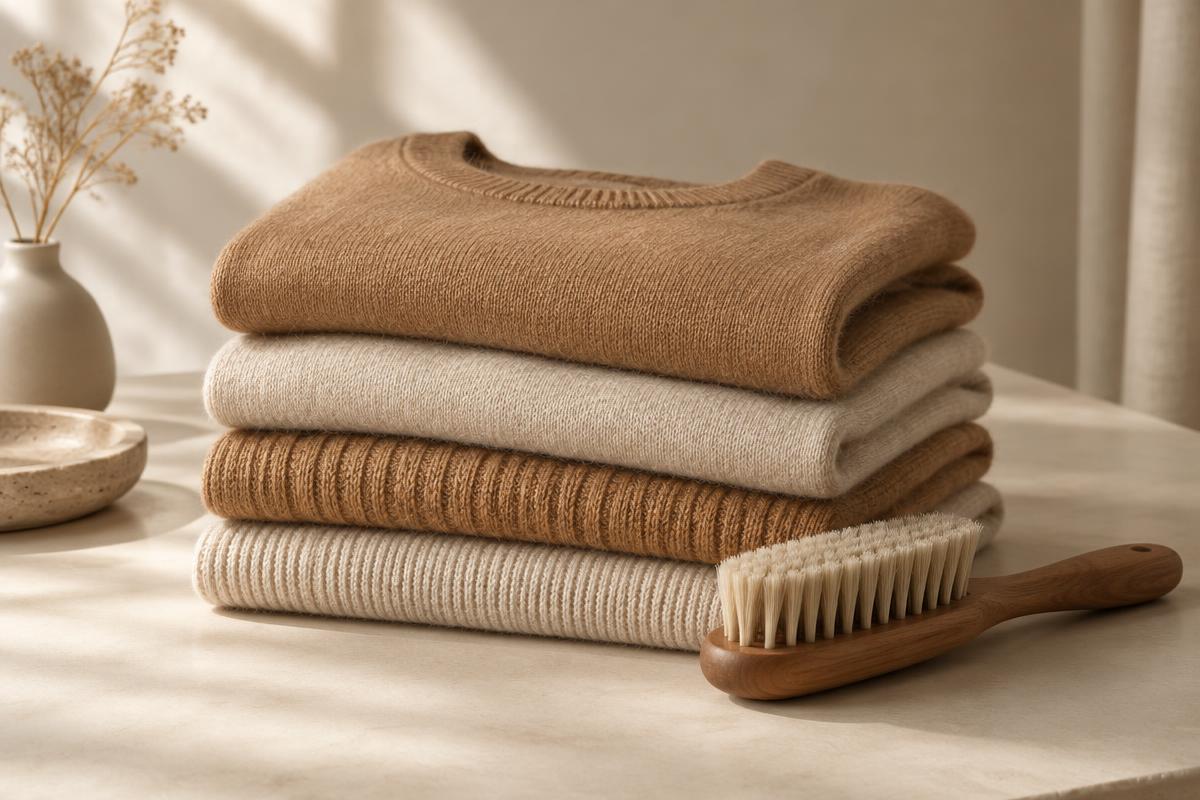
After a day of wear, hang the piece on a wide hanger in a cool, ventilated room overnight. Wool releases creases and odour on its own as it dries out. Once a week, run a clothes brush down the grain for a minute; that lifts surface dust and short fluff before they become felted into the fabric.
Wash only when there is a stain or a smell that airing will not shift. When you do, fill a basin with cold water and a cap of wool detergent, submerge the garment, leave it for ten minutes, then press the water out — never wring it.
Lay knits flat on a towel away from sunlight and reshape them with your hands. A wet sweater hung on a hanger will stretch out of shape under its own weight and never come back. Woven wool — coats, trousers, blazers — can be hung normally on a shaped hanger.
In the off-season, store wool clean, folded where possible, with cedar rather than mothballs. Moths are attracted to body oils and food residues left on a garment, which is why a jacket worn once and put straight back into the cupboard is the one that comes out with holes.
Small balls of fibre form where fabric rubs — at cuffs, under a bag strap, behind the knee. They are loose fibres, not worn-out ones. Shave them off with a cashmere comb or a battery pill shaver, always on a flat surface, and the garment will look new again.
Treat the seams, not the face. A knit pulled at the shoulder should be taken to a tailor rather than thrown out; re-linking a seam costs a fraction of the piece and buys another decade of wear.
Read next
A capsule wardrobe that actually works