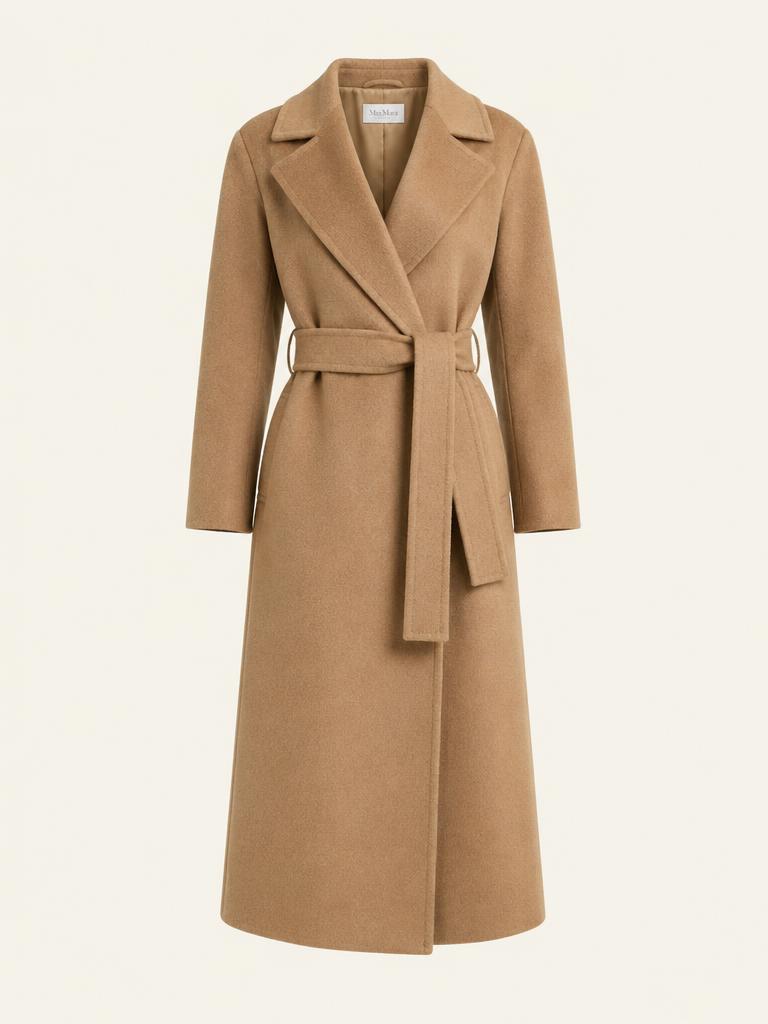
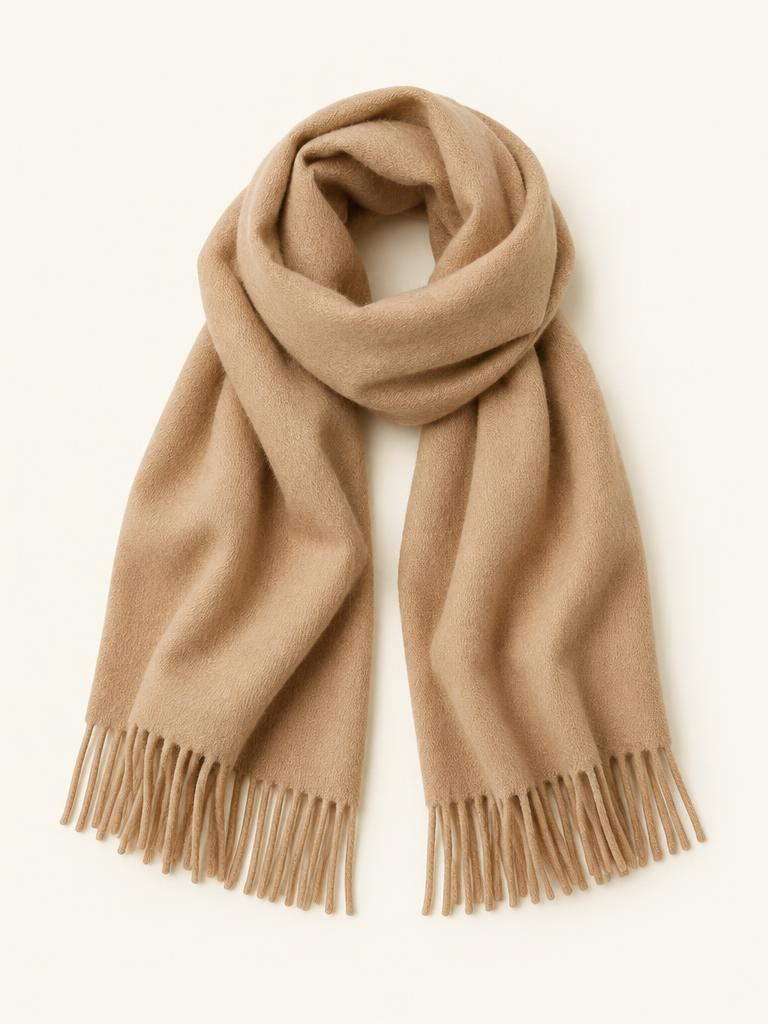
Inside the atelier: how one coat takes nine days
Two hundred hand operations, one sewing machine, and a lot of waiting for the wool to settle.
9 September 2026 · 5 min read
Two hundred hand operations, one sewing machine, and a lot of waiting for the wool to settle.
9 September 2026 · 5 min read
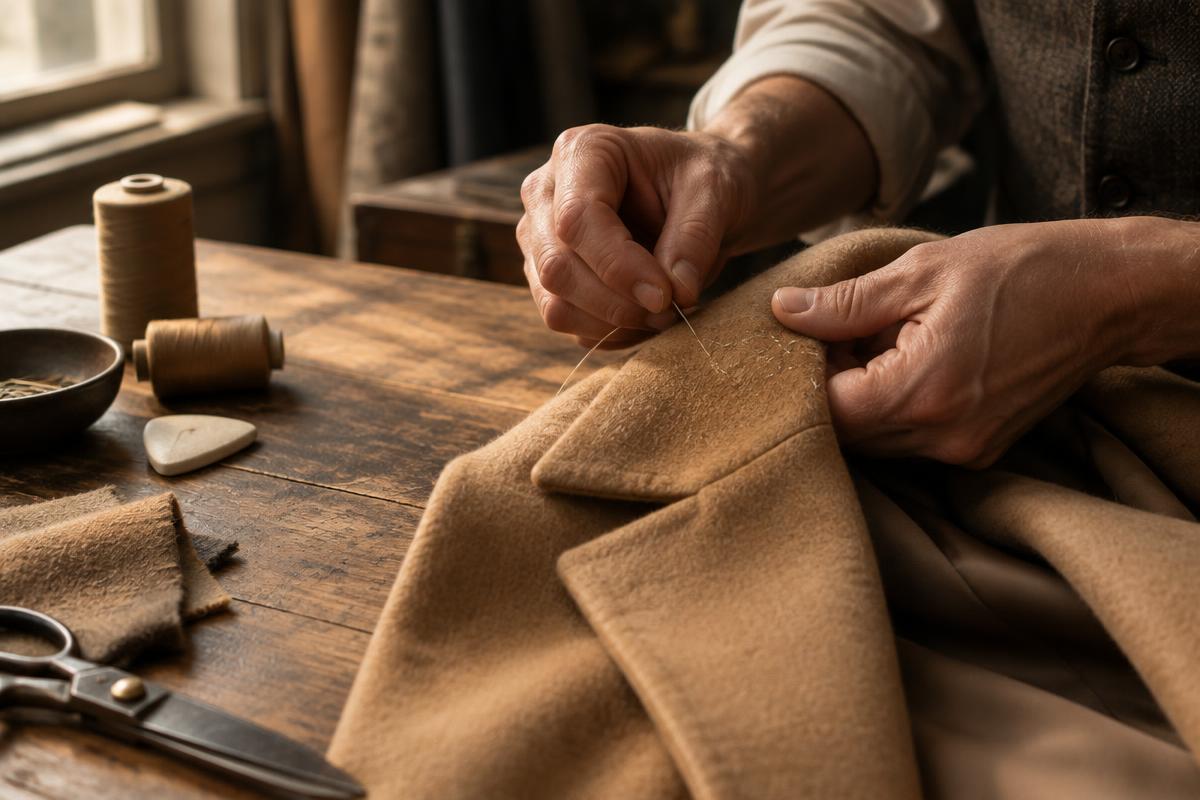
The coat starts as a paper pattern, cut at full size on brown paper and pinned to the cloth. Nothing is graded on a screen. The pattern is walked around the fabric by hand so the weave runs the same way in both fronts — a detail nobody sees and everybody feels when the coat hangs.
The chest piece is built with a floating horsehair canvas, hand-stitched to the wool so the lapel rolls instead of folding flat. A fused interlining is quicker and cheaper, and it bubbles after two dry cleans. Ours is basted in with a running stitch that takes a cutter most of a day.
The canvas is also why the coat needs nine days. It has to be left to settle between operations so the wool relaxes into the shape the canvas is holding it in.
Buttonholes are worked by hand in silk, which is why they sit slightly raised. Button shanks are wound so the button stands off the cloth and the fastening does not pull. Inside, the seams are finished with bias binding rather than overlocked, so the coat can be let out a size without the raw edge showing.
The lining is cut a little full through the back so the coat moves with you and the shell never takes the strain.
Pressing is done on a wooden ham with a hand iron and a damp cloth, in several passes — a machine press flattens the shoulder, a hand press shapes it. Then the coat hangs for a night before it is checked, because wool keeps moving for a day after it is pressed.
A coat that leaves here should be able to be taken apart and rebuilt. Every seam is openable. That is the whole point of making it this way.
Read next
How to care for wool so it lasts decades